
EchoPitch vs Human Coaching
An honest comparison. AI coaching and human coaching serve different needs — here's how to decide which is right for you, and when to use both.
Quick Answer
EchoPitch and human coaching solve different needs, so the right choice depends on what you're optimising for. EchoPitch gives instant, objective feedback on pace, filler words, and confidence signals, available 24/7 for unlimited practice — free to start. A human coach typically charges £100 to £400 per session, or £1,500 to £5,000 for a full programme, and brings qualitative insight, content strategy, and genuine emotional support that AI cannot replicate. Because AI coaching is affordable and always available, users typically log around 20 times more practice sessions per month than human-coaching clients, and volume of practice is the strongest predictor of improvement. Human coaching earns its cost for genuinely high-stakes one-off events like an investor pitch or TEDx talk, or when anxiety is severe enough to need professional support. For regular, sustained improvement, EchoPitch is the practical choice; the two are complementary rather than competing.
more practice sessions per month are typical for AI coaching users vs human coaching clients — at a fraction of the cost. Volume of practice is the single strongest predictor of presentation improvement.
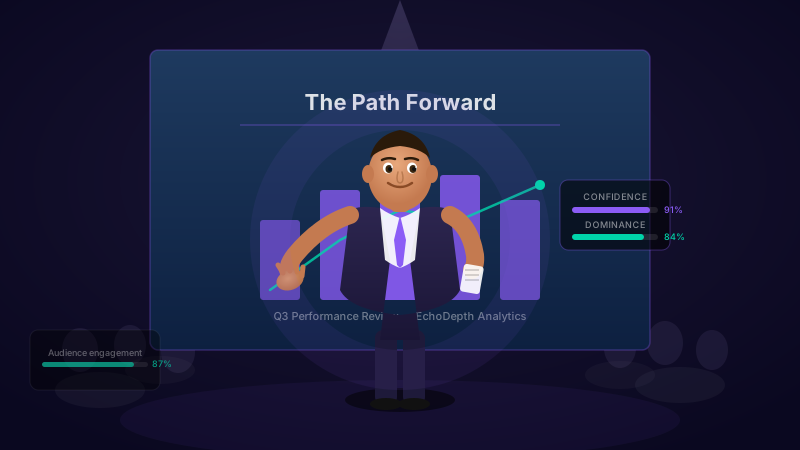
Side-by-side comparison
| Aspect | EchoPitch (AI) | Human Coach |
|---|---|---|
| Cost | 5 sessions for £9.99 paid once, then £29/month | £100–400+ per session, typically £1,500–5,000 for a programme |
| Availability | 24/7, on demand, unlimited sessions | Scheduled appointments, typically weekly |
| Feedback speed | Instant — during or immediately after practice | Reflective — in session or follow-up notes |
| Objectivity | Consistent, data-driven, no social pressure | Subjective, relationship-dependent, may soften feedback |
| Depth of insight | Quantified delivery metrics (pace, filler words, confidence signals) | Qualitative insight, strategic advice, content structuring |
| Volume of practice | Unlimited — practice as often as needed | Limited by appointment frequency and cost |
| Accountability | Self-directed, requires personal discipline | External accountability — committed appointments |
| Emotional support | None — data and feedback only | Genuine — coaches understand and work with anxiety directly |
| Content strategy | Limited — feedback on delivery not content | Strong — coaches help structure and shape what you say |
| High-stakes preparation | Good for technical rehearsal volume | Better for strategy, nerves management, and pressure simulation |
When AI coaching is the better choice
Regular practice volume
If the goal is building procedural memory through repeated practice, AI coaching enables the volume that human coaching economics don't. You can practise daily; you can't afford a human coach daily.
Objective delivery feedback
Human coaches give qualitative feedback that is valuable but subjective. AI coaching quantifies pace, filler words, confidence signals, and delivery consistency across multiple sessions — tracking improvement over time.
Reducing anxiety through exposure
The mechanism that reduces presentation anxiety is graduated exposure. AI coaching enables unlimited low-stakes practice — the exposure without the social threat. This is where most of the anxiety reduction work happens.
Cost-effective ongoing improvement
For professionals who present regularly, sustained improvement requires sustained practice. Human coaching at £200/session is not practically maintainable weekly. AI coaching is.
When human coaching is worth the investment
Genuinely high-stakes, one-off presentations
For an investor pitch, a TEDx talk, or a board presentation where the stakes are extremely high and the event is specific, a human coach's contextual expertise, pressure simulation, and strategic input justifies the cost.
Severe anxiety requiring professional support
When presentation anxiety is severe enough to significantly impair professional function, the therapeutic component of working with a specialist coach or psychologist offers something AI cannot — genuine human understanding and clinical technique.
Content and strategy development
If the problem is not how you deliver but what you're saying, human coaches bring strategic thinking, narrative structuring, and domain expertise that AI coaching doesn't offer.
Accountability and external structure
Some people practice consistently only when they have committed appointments. If self-directed practice doesn't happen in practice, the accountability of scheduled human sessions may be worth the cost.
Start with AI coaching — free
EchoPitch gives you instant AI feedback on confidence, pace, and delivery. No appointment, no cost to start — just record and improve.
Try EchoPitch →