
How to Stop Shaking When Presenting
Quick Answer
Shaking when presenting is caused by the sympathetic nervous system's fight-or-flight response: your brain reads public speaking as a social threat and floods your system with adrenaline, priming muscles for action that never comes. For most people, shaking peaks in the first 2-3 minutes and subsides once the brain registers there is no real danger. In the moment, several techniques help: vigorously shake your hands for 20-30 seconds before you start, use the 4-7-8 breathing technique (inhale 4, hold 7, exhale 8) to activate your parasympathetic nervous system, use purposeful large gestures so micro-tremors become invisible, hold a pen or clicker to anchor your hands, and press your feet flat on the floor to ground your attention. These manage symptoms, but only desensitisation addresses the cause — repeated, non-catastrophic exposure, such as AI-powered practice with no real audience, teaches your nervous system that presenting is safe.
To stop shaking when presenting:
- 1. Shake it out — vigorously shake your hands for 20-30 seconds before entering
- 2. 4-7-8 breathing — inhale 4 counts, hold 7, exhale 8 (activates calm response)
- 3. Use purposeful gestures — planned hand movements hide micro-tremors
- 4. Hold something — pen or clicker anchors your hands
- 5. Press feet flat on floor — grounds attention away from symptoms
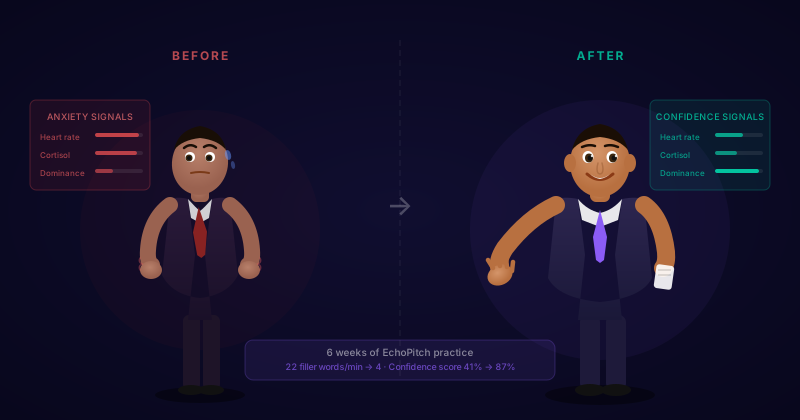
Nine techniques that actually work — backed by the science of what causes presentation tremors in the first place.
MBA, Bayes Business School · Founder, Cavefish · May 2026
Why You Shake: The 90-Second Science
When your brain perceives a presentation as a social threat, it triggers the sympathetic nervous system. Adrenaline floods your system, priming muscles for physical action — running or fighting — that never comes. The result is trembling hands, a shaky voice, wobbly legs. You are not weak. You are having a completely normal biological response to a perceived threat. The goal is to tell your body the threat is not real.
9 Techniques to Stop Shaking
Shake it out intentionally
Before you enter the room, vigorously shake your hands for 20–30 seconds. This releases the accumulated physical tension and paradoxically reduces subsequent trembling. It feels silly. Do it anyway — somewhere private.
4-7-8 breathing
Inhale through your nose for 4 counts. Hold for 7. Exhale slowly through your mouth for 8. Repeat three times. This activates the parasympathetic nervous system — your body's calm state — and measurably reduces cortisol levels within minutes. Do this in the car, the corridor, the bathroom.
Use purposeful, large gestures
Micro-tremors in your hands are invisible when your hands are moving with purpose. Plan two or three deliberate gestures for your opening minutes — pointing at a slide, counting points on your fingers, opening your palms to the audience. Intentional movement cancels out trembling.
Hold something
A pen, a clicker, or a glass of water gives your hands an anchor point and makes any remaining trembling far less visible. Do not grip it — hold it loosely. Gripping amplifies trembling by increasing muscle tension.
Press your feet flat on the floor
Feel the full contact between the soles of your feet and the ground. This simple grounding technique shifts attention from internal symptoms (the trembling you are feeling) to external physical sensation. It interrupts the anxiety feedback loop.
Speak more slowly than feels comfortable
Speed amplifies the perception of shaking — both yours and the audience's. Slow down by 30%. Your voice will sound more authoritative, the trembling will be less perceptible, and the slower pace gives your parasympathetic system time to engage.
Warm your hands before you start
Cold hands tremble more visibly. Run warm water over your hands for 60 seconds in the bathroom before presenting. Warm hands have better blood flow and less visible tremor.
Move to reduce adrenaline
The adrenaline in your system was designed to power movement. If you can, walk around before presenting — even briefly pacing a corridor burns off some of the hormone load before you speak.
Practice under mild stress conditions
The only long-term solution is desensitisation. Your body needs evidence that presenting is safe. Recording yourself presenting with EchoPitch creates mild presenting stress — enough for your nervous system to practise regulating — without the full social threat of a live audience.
The Hard Truth About Shaking
Techniques 1–8 manage symptoms. Only technique 9 addresses the cause. The body learns safety through repeated, non-catastrophic exposure to the feared situation. Every time you present and survive, you give your brain a data point that the situation is not dangerous. Over enough repetitions, the fear response becomes smaller.
Most nervous presenters never practice enough because the anxiety of practice feels as bad as the anxiety of the real thing. AI-powered practice changes this by removing the social threat component — no one is watching — which makes repeated practice actually achievable.
- Sympathetic nervous system
- The branch of the autonomic nervous system responsible for the fight-or-flight response. Activated by perceived threats including public speaking.
- Parasympathetic nervous system
- The rest-and-digest counterpart. Activated by deep breathing, physical grounding and other calming techniques. Counteracts the adrenaline response.
- Desensitisation
- The gradual reduction of a fear response through repeated, non-threatening exposure to the feared stimulus. The mechanism through which practice reduces presentation anxiety.
Start Desensitising Today
EchoPitch lets you practise presenting privately with instant AI feedback. No audience. No judgement. Just the repeated low-threat exposure your nervous system needs.
Start Practising Free →