
Quick Answer
Presentation anxiety (glossophobia) is intense fear or nervousness when speaking in front of others, affecting roughly 75% of people to some degree. It happens because your brain's threat-detection system (the amygdala) misreads social evaluation as physical danger, triggering the same fight-or-flight response you'd get from a real threat — racing heart, shaky hands, shallow breathing, and a mind that suddenly goes blank. It's highly treatable: the 4-7-8 breathing technique calms the nervous system in under a minute, cognitive reframing reduces the perceived threat, and systematic practice retrains the brain's response over time. Most people see measurable improvement within 2-4 weeks of consistent practice, with significant reduction by 4-8 weeks. This guide covers 12 specific techniques — breathing exercises, exposure practice, cognitive reframing, and delivery adjustments — along with what causes the anxiety response and how to tell normal nerves from something that needs professional support.
Written by Jonathan Prescott
MBA, Bayes Business School · 10+ years corporate presentation training · Last updated: June 2026
What is presentation anxiety?
Presentation anxiety (glossophobia) is intense fear or nervousness triggered by speaking in front of others. It's caused by your brain's threat-detection system perceiving social evaluation as danger — triggering the same fight-or-flight response as physical threat. Symptoms include racing heart, sweating, shaking, and mind going blank. It affects 75% of people and is highly treatable through breathing techniques, cognitive reframing, and systematic practice.
of people experience presentation anxiety
weeks to see significant improvement
most common social phobia worldwide
success rate with systematic practice
If the thought of presenting makes your heart race and palms sweat, you're not alone. Studies show that 75% of people experience some form of public speaking anxiety — making glossophobia one of the most common phobias in the world.
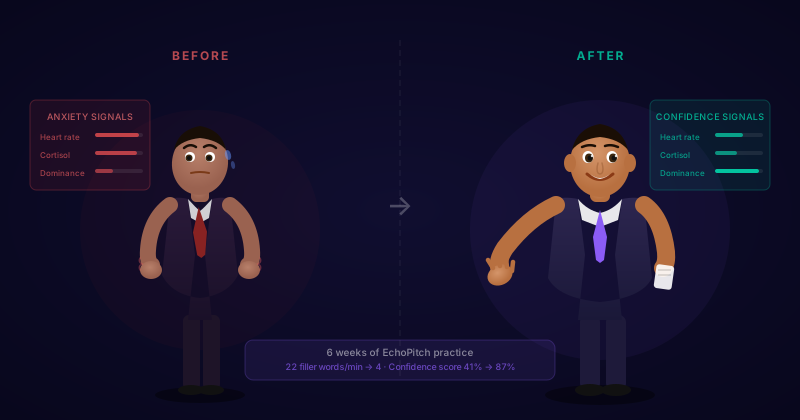
The good news? Presentation anxiety is highly treatable. Unlike many fears, this one responds remarkably well to the right combination of understanding, techniques, and practice.
Sources: Prevalence data from Dwyer & Davidson (2012) "Speech anxiety in a national survey"; Kessler et al. (2005) National Comorbidity Survey Replication; Treatment efficacy from Heimberg & Becker (2002) "CBT for social phobia". See full statistics breakdown →
What's in this guide
1. What is presentation anxiety?
Presentation anxiety (also called glossophobia) is the fear of speaking in front of others. It exists on a spectrum — from mild nervousness to severe panic.
Common signs include:
- Racing heart and sweaty palms
- Mind going blank when speaking
- Shaky voice or trembling hands
- Avoiding presentations entirely
- Difficulty sleeping the night before
- Negative self-talk ("I'm going to mess this up")
Not sure how severe your anxiety is? Take our free glossophobia test and severity checker to find out.
Important: Some nervousness before presenting is completely normal — and even helpful. The goal isn't to eliminate all anxiety, but to manage it.
2. Why you get nervous: The Anxiety Response Model
The Anxiety Response Model
Presentation anxiety follows a predictable three-stage pattern that explains why your body reacts the way it does — and how to interrupt it:
- 1. Threat Detection — Your amygdala perceives social evaluation as danger (even though it isn't). This happens unconsciously in milliseconds.
- 2. Physiological Cascade — Your sympathetic nervous system triggers fight-or-flight: adrenaline release, elevated heart rate, blood flow to muscles, digestive pause.
- 3. Cognitive Hijack — Resources redirect from your prefrontal cortex (thinking, memory) to survival systems. This causes "mind blank" and difficulty accessing prepared material.
The intervention point: Breathing techniques work because they activate the parasympathetic nervous system, directly interrupting Stage 2 before the cognitive hijack of Stage 3.
When you perceive a threat (like being judged by an audience), your brain activates the sympathetic nervous system, triggering fight-or-flight.
This causes:
- Increased heart rate
- Sweating
- Shallow breathing
- Tunnel vision
- Digestive slowdown
The problem? Your brain can't distinguish between a real physical threat and a social threat. Both trigger the same response.
3. Physical symptoms and management
Diaphragmatic breathing (4-7-8 technique)
This activates your parasympathetic nervous system, counteracting fight-or-flight. For more breathing exercises, see our guide on how to calm nerves before presenting.
- Breathe in through your nose for 4 seconds
- Hold for 7 seconds
- Exhale slowly through your mouth for 8 seconds
- Repeat 3-4 times before presenting
Progressive muscle relaxation
Tension often accumulates in shoulders, jaw, and hands:
- Tense each muscle group for 5 seconds
- Release and notice the relaxation
- Focus on shoulders, hands, and jaw
Power posing
Research suggests expansive postures can increase confidence. Learn more about non-verbal communication in our body language guide:
- Stand tall with hands on hips for 2 minutes before presenting
- Avoid closed, protective postures
- Take up space — it signals confidence to your brain
4. Mental techniques that work
Cognitive reframing
Common unhelpful thoughts and their reframes:
- "Everyone will judge me" → "Most people want me to succeed"
- "I'll forget everything" → "I can use notes, and pausing is normal"
- "This will be a disaster" → "Even if not perfect, I'll learn something"
- "I'm not a natural presenter" → "Presenting is a skill that improves with practice"
Visualization
Mental rehearsal activates similar neural pathways to actual performance. We have a dedicated guide on visualisation techniques for presenters:
- Close your eyes and imagine giving your presentation successfully
- Include sensory details: the room, your confident voice, audience nodding
- Visualize handling a mistake calmly
- Practice this daily before your presentation
Focus on contribution, not performance
Shift from "How will I perform?" to "What value can I provide?" Ask yourself: "What do I want them to learn, feel, or do differently?"
5. Practice strategies for building confidence
Effective practice is one of the most powerful tools against anxiety. Our guide on how to practice a presentation effectively covers this in depth.
Systematic desensitization
Gradually expose yourself to the feared situation:
- Practice alone, out loud
- Record yourself and watch back
- Practice in front of one trusted person
- Practice in front of a small group
- Practice in the actual setting
How EchoPitch helps
EchoPitch provides a private, low-pressure environment for systematic practice:
- Record yourself answering real questions
- Get AI feedback on specific areas
- Track confidence scores over time
- Compare attempts to see progress
6. Before, during, and after
The day before
- Do a full run-through (but don't over-rehearse)
- Prepare everything you need
- Get good sleep
- Visualize success before sleeping
Minutes before
- Do your breathing exercises
- Power pose for 2 minutes
- Remind yourself of your purpose
- Accept that some nervousness is normal
During
- Start with something you know well
- Find friendly faces in the audience
- If you lose your place, pause, breathe, check notes
- Remember: the audience wants you to succeed
Afterwards
- Acknowledge what went well
- Note 1-2 things to improve
- Celebrate that you did it
7. Presentation anxiety at work
Workplace presentations carry unique pressures: your career, reputation, and relationships with colleagues are all on the line. Here's what helps in professional contexts:
Should you tell your manager?
This depends on your relationship and workplace culture. Consider disclosure if:
- Your manager is supportive and you need accommodations (e.g., presenting to smaller groups first)
- Anxiety is affecting your performance reviews
- You need time for therapy appointments
Frame it professionally: "I'm working on improving my presentation skills and would appreciate opportunities to present to smaller groups first." You don't need to use clinical language.
High-stakes presentations
Board presentations, client pitches, and all-hands meetings amplify anxiety. Strategies that help:
- Over-prepare the opening: The first 60 seconds are hardest — know them cold
- Arrive early: Familiarise yourself with the room, test equipment, claim your space
- Have a recovery plan: Know what you'll do if you lose your place (pause, breathe, check notes)
- Focus on one friendly face: Find an ally in the room and present to them initially
Virtual presentations
Video calls create unique challenges: seeing yourself on screen, technical issues, and lack of audience feedback. Our online meeting anxiety guide covers this in depth.
8. Specific situations
Presentation anxiety affects different people differently. We've created specialised guides for specific contexts:
University Students
Why presentations feel harder at university — and strategies that work for assessed presentations.
Teenagers
Adolescence makes presentation anxiety intense. Guide for teens and parents.
Children (Ages 5-12)
Show-and-tell and reading aloud — helping younger children with speaking fears.
ADHD
Why presentations hit harder with ADHD — and techniques that actually work.
Autism
Presentation strategies that work with neurological differences.
Medication Options
Beta blockers (propranolol) for presentations — evidence, dosing, and what to expect.
Key takeaways
- Presentation anxiety is common (75% of people) and treatable
- Physical symptoms are your body's protection response — not weakness
- Breathing techniques and power posing help manage symptoms
- Cognitive reframing changes unhelpful thought patterns
- Systematic practice builds lasting confidence
- Focus on value you're providing, not your performance
Related guides
Glossophobia: The Fear of Public Speaking
Deep dive into the psychology, neuroscience, and treatment of speech phobia.
Panic Attack During a Presentation
What to do if panic strikes mid-presentation — 5-step intervention guide.
How to Calm Your Nerves Before Presenting
Quick techniques for the minutes before you present.
How to Stop Shaking When Presenting
Practical techniques for managing visible trembling.