
Mastering Behavioral Interview Prep with AI Feedback: The Complete STAR Method Training Guide
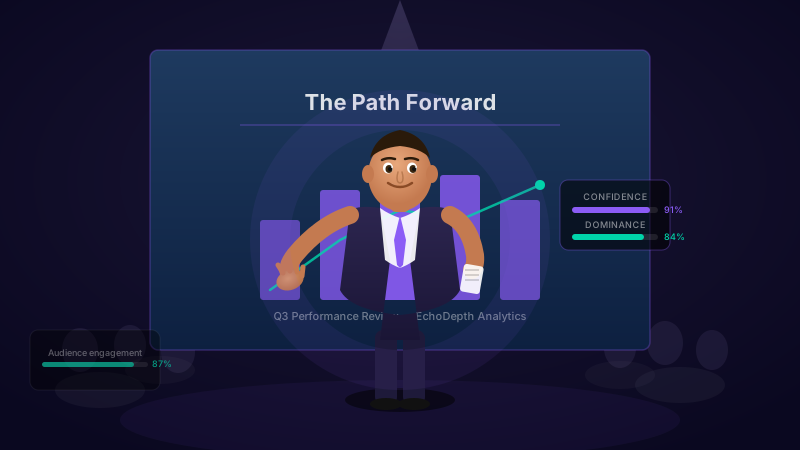
"Tell me about a time when..." These five words determine more hiring decisions than any technical assessment. Behavioral interview prep AI transforms how candidates master these crucial questions, providing objective feedback on story structure, delivery quality, and persuasive impact that traditional practice cannot match.
Quick Answer
Behavioral interview prep AI is technology that helps candidates rehearse "tell me about a time when..." questions by analyzing STAR structure, delivery quality, and content in real time. It checks whether your Situation sets context (15-20% of the response), your Task defines your role (10-15%), your Action details specific steps you took (50-60%, the heart of the answer), and your Result quantifies the outcome (15-20%) — the section 73% of candidates deliver weakest. The AI also flags vague language, excessive "we" instead of "I," rushed pacing, and rising filler words that appear when discussing failures or conflict. Since behavioral performance drives 40-60% of hiring decisions, this matters: candidates need 5-7 adaptable core stories and typically see strong results after 8-12 practice sessions over two weeks. Optimal responses run 60-90 seconds (roughly 150-225 words) — long enough for detail, short enough to hold interviewer attention.
MBA, Bayes Business School · Founder, Cavefish · July 2026
Key Takeaways
- •AI analyzes STAR method structure and flags missing elements in real-time
- •Candidates need 5-7 core stories adaptable to various behavioral questions
- •Optimal responses last 60-90 seconds—AI monitors length and pacing
- •The Result section fails most often—AI specifically strengthens outcomes
- •Private AI practice enables honest rehearsal of failure and conflict stories
Why Behavioral Interviews Demand Specialized Preparation
Behavioral interviews operate on a simple premise: past behavior predicts future performance. When interviewers ask "Tell me about a time you handled a difficult team member," they're not interested in hypotheticals—they want evidence from your actual experience.
This creates a unique preparation challenge. Unlike technical questions with right answers, behavioral questions require compelling storytelling, appropriate detail selection, and confident delivery. Many candidates know the STAR method intellectually but struggle to execute it under pressure. Behavioral interview prep AI addresses this gap by providing structured practice with objective feedback.
The stakes are significant. Research indicates that behavioral interview performance accounts for 40-60% of hiring decisions at major companies. Technical skills get you to the interview; behavioral responses determine whether you receive an offer.
The STAR Method: Foundation of Behavioral Interview Success
Before exploring how AI enhances preparation, understanding the STAR framework is essential. This structure transforms rambling anecdotes into persuasive professional narratives.
STAR Method Components
Situation (15-20% of response)
Set the context. Where were you working? What was the broader challenge? Provide just enough background for the story to make sense—no more.
Task (10-15% of response)
Define your specific responsibility. What was YOUR role? What were you accountable for? This distinguishes your contribution from team efforts.
Action (50-60% of response)
Detail what YOU did. Use "I" not "we." Describe specific steps, decisions, and approaches. This is the heart of your answer.
Result (15-20% of response)
Quantify the outcome. What improved? By how much? What did you learn? Results with numbers dramatically increase credibility.
Most candidates understand this framework conceptually. The challenge is execution—maintaining structure under interview pressure while delivering with confidence. This is precisely where AI feedback creates advantage.
How AI Transforms Behavioral Interview Preparation
Behavioral interview prep AI provides capabilities impossible through traditional practice methods. Understanding these features helps you maximize preparation effectiveness.
Real-Time Structure Analysis
As you practice, AI evaluates whether your response includes all STAR components. Missing a clear Task statement? The system flags it immediately. Result section lacks quantification? You receive specific guidance on strengthening outcomes.
This immediate feedback prevents you from practicing incomplete responses repeatedly. Without AI, candidates often reinforce weak patterns because no one identifies structural gaps.
Optimal behavioral response length
Response dedicated to Action
Content Quality Evaluation
Beyond structure, AI evaluates content quality within each STAR component:
Specificity detection: Vague statements like "I improved the process" get flagged. AI prompts for concrete details—what specifically changed? By what percentage? Over what timeframe?
First-person focus: Behavioral questions assess YOUR capabilities, not your team's. AI identifies excessive "we" language and coaches toward "I" statements that demonstrate personal contribution.
Relevance scoring: AI evaluates whether your example actually addresses the competency being assessed. A leadership question answered with a solo technical achievement gets flagged for misalignment.
Delivery Quality Analysis
Structure and content matter, but delivery determines impact. AI simultaneously evaluates:
Pacing: Rushing through your story signals anxiety and reduces comprehension. AI tracks words-per-minute, flagging sections where nervous acceleration undermines your narrative.
Filler words: "Um," "like," and "you know" increase when discussing uncomfortable topics like failures. AI identifies these patterns, helping you practice difficult stories until delivery smooths.
Vocal confidence: Downward inflections, steady pace, and appropriate emphasis create authority. AI measures these vocal qualities, distinguishing confident delivery from hesitant recounting.
Building Your Behavioral Story Library
Effective behavioral interview prep AI practice requires quality raw material. Before practicing delivery, you need well-chosen stories that demonstrate key competencies.
The 5-7 Story Strategy
You don't need unique stories for every possible question. Research shows that 5-7 well-crafted stories can address virtually any behavioral question through strategic adaptation. The key is selecting stories that demonstrate multiple competencies.
Essential Story Categories
- 1.Leadership/Influence: A time you led a team, project, or initiative—formal authority optional
- 2.Conflict Resolution: Successfully navigating disagreement with a colleague, client, or stakeholder
- 3.Problem-Solving: Tackling a complex challenge with creative or analytical approaches
- 4.Failure/Learning: A significant setback and how you recovered and grew from it
- 5.Achievement/Impact: Your most significant professional accomplishment with measurable results
- 6.Collaboration: Working effectively with diverse teams or difficult personalities
- 7.Adaptability: Responding to unexpected change, ambiguity, or shifting priorities
Story Selection Criteria
Not all experiences make strong behavioral stories. Ideal examples share these characteristics:
Recent (within 2-3 years): Fresh examples demonstrate current capabilities. Older stories work for significant achievements but shouldn't dominate your library.
Professionally relevant: Match story complexity to target role level. Entry-level positions accept academic examples; senior roles require professional demonstrations.
Quantifiable outcomes: Stories with measurable results dramatically outperform vague "it went well" conclusions. If you can't quantify, reconsider the example.
Clear personal contribution: Group projects work if you can articulate YOUR specific impact. Avoid stories where your individual role is unclear.
Common Behavioral Question Categories and AI Practice Strategies
Different question types require different preparation approaches. Behavioral interview prep AI helps you master each category with targeted practice.
Leadership Questions
"Tell me about a time you led a team through a challenge."
These questions assess influence capability regardless of formal authority. AI evaluates whether your response demonstrates vision-setting, motivation techniques, and accountability for outcomes. Common pitfalls include focusing on what the team did rather than how you led them.
AI coaching tip: Practice leadership stories until you naturally use phrases like "I decided," "I communicated," and "I held the team accountable" rather than passive descriptions of team activities.
Conflict Questions
"Describe a situation where you disagreed with a colleague."
Interviewers assess emotional intelligence and professional maturity. AI flags responses that blame others, lack acknowledgment of the other perspective, or don't demonstrate resolution. The goal is showing you can navigate disagreement constructively.
Failure Questions
"Tell me about a time you failed or made a significant mistake."
These questions terrify candidates but offer opportunity. AI helps you practice delivering failure stories with appropriate ownership (not excessive self-blame) and clear learning outcomes. Vocal confidence tracking is especially valuable here—most candidates' delivery deteriorates when discussing failures.
Problem-Solving Questions
"Walk me through how you approached a complex problem."
Structure is crucial here. AI evaluates whether you clearly define the problem, explain your analytical approach, describe decision criteria, and present results logically. Candidates often jump to solutions without establishing the problem's complexity.
The Result Section: Where Most Candidates Fail
Analysis of thousands of behavioral responses reveals a consistent pattern: the Result section is the weakest element. Behavioral interview prep AI specifically targets this vulnerability.
Common Result Section Failures
Vague conclusions: "It worked out well" or "the project was successful" provides no evidence of impact. Interviewers want specifics.
Missing quantification: "We improved efficiency" versus "We reduced processing time by 40%, saving 12 hours weekly"—the second version dramatically increases credibility.
No learning reflection: Especially for failure stories, what you learned matters as much as what happened. Missing this element suggests limited self-awareness.
Abrupt endings: Rushing through results because you're running long undermines everything preceding it. AI monitors time allocation, helping you budget appropriately.
Of candidates have weak Result sections
Impact of quantified vs. vague results
Response time for Result section
Strengthening Your Results
AI coaching helps you build results that convince. For each story in your library, practice articulating:
Quantitative outcomes: Numbers, percentages, dollar amounts, time saved, efficiency gained. If the direct metric isn't available, find proxy measures.
Business impact: Connect your result to organizational goals. "This contributed to the team exceeding quarterly targets" contextualizes individual achievement.
Personal growth: What capability did you develop? How do you apply that learning now? This demonstrates self-awareness and continuous improvement.
Recognition received: If applicable, mention promotions, awards, or expanded responsibilities that resulted. External validation strengthens your narrative.
Practicing Difficult Behavioral Topics
Some behavioral questions probe uncomfortable territory. The privacy of behavioral interview prep AI enables honest practice that social settings inhibit.
Failure and Mistake Questions
Candidates avoid practicing failure stories because they're uncomfortable to recount, especially with friends or coaches watching. AI practice eliminates this barrier.
Effective failure responses require balance: acknowledge the mistake genuinely, explain (don't excuse) contributing factors, detail corrective actions, and emphasize lasting learning. AI helps you find this balance through iterative practice without social judgment.
Conflict and Difficult People Questions
These questions require careful framing. You need to describe genuine conflict without appearing difficult yourself. AI evaluates your language for blame indicators, acknowledgment of other perspectives, and professional tone throughout.
Weakness and Growth Area Questions
The dreaded "greatest weakness" often appears in behavioral form: "Tell me about a time your weakness affected your work." AI helps you practice authentic responses that acknowledge real development areas while demonstrating self-awareness and improvement commitment.
Optimizing Response Length and Pacing
Behavioral interview prep AI provides objective measurement of response characteristics that significantly impact interviewer perception.
The 60-90 Second Sweet Spot
Analysis of successful behavioral responses reveals optimal length: 60-90 seconds (approximately 150-225 words). Shorter responses lack necessary detail; longer responses risk losing interviewer attention.
AI tracks your response duration in real-time, helping you calibrate. Most candidates initially run too long—practicing with time awareness builds concision.
Pacing Patterns That Undermine Credibility
Nervous candidates typically accelerate through stories, especially during uncomfortable sections. This rapid delivery:
- •Reduces comprehension—interviewers miss key points
- •Signals anxiety—undermining confidence impression
- •Suggests rehearsal—making responses seem inauthentic
AI identifies these patterns, showing exactly where your pace accelerates. With this awareness, you can practice maintaining steady, confident delivery throughout.
Industry-Specific Behavioral Preparation
Different industries emphasize different competencies. Effective behavioral interview prep AI adapts to your target context.
Technology and Engineering
Technical behavioral questions emphasize problem-solving methodology, collaboration with non-technical stakeholders, and handling ambiguity. Stories should demonstrate systematic thinking and communication of complex concepts.
Finance and Consulting
These industries value analytical rigor, client management, and working under pressure. Behavioral responses should include specific metrics and demonstrate structured approaches to problems.
Sales and Business Development
Relationship building, resilience after rejection, and competitive drive dominate. Stories should demonstrate persistence, client focus, and measurable revenue impact.
Healthcare and Education
Empathy, patient/student focus, and ethical decision-making take priority. Behavioral responses should demonstrate care alongside competence.
Advanced AI Features for Behavioral Interview Mastery
Beyond basic practice, advanced behavioral interview prep AI capabilities accelerate preparation.
Story Adaptation Training
The same experience can answer multiple question types with slight reframing. AI helps you practice adapting core stories: emphasizing leadership elements for one question, conflict resolution for another, from the same underlying experience.
Follow-Up Question Simulation
Real interviews include probing follow-ups: "What would you do differently?" "How did others respond?" "What happened next?" AI simulates these follow-ups, ensuring you can elaborate without losing composure.
Competency Gap Identification
After multiple practice sessions, AI identifies which competency areas lack strong stories. Perhaps you have excellent leadership examples but weak adaptability demonstrations. This gap analysis guides story development priorities.
Creating Your Behavioral Interview Practice Plan
Structured preparation outperforms random practice. This research-backed plan maximizes AI feedback value.
2-Week Behavioral Interview Prep Plan
Week 1: Foundation Building
- •Days 1-2: Identify 5-7 stories covering key competencies. Write brief outlines.
- •Days 3-4: Practice each story once with AI feedback. Note structural gaps.
- •Days 5-7: Revise stories based on feedback. Re-practice until structure is solid.
Week 2: Refinement and Confidence
- •Days 8-10: Focus on delivery—reduce filler words, optimize pacing, strengthen results.
- •Days 11-12: Practice story adaptation across question types.
- •Days 13-14: Full mock interviews with varied questions. Build consistency.
Getting Started with AI-Powered Behavioral Interview Practice
EchoPitch provides comprehensive behavioral interview prep AI designed for candidates serious about mastering situational questions.
STAR Structure Analysis: Real-time evaluation of each response component with specific guidance on strengthening Situation, Task, Action, and Result sections.
Delivery Coaching: Track filler words, pacing, and vocal confidence across every practice session. Identify patterns that emerge with specific question types.
Comprehensive Question Bank: Practice with hundreds of behavioral questions across competency categories. Add company-specific questions for targeted preparation.
Progress Tracking: Monitor improvement across sessions. See which competency areas are strong and where additional practice is needed.
Private Practice Environment: Rehearse failure stories, conflict examples, and other difficult topics without judgment. Build confidence before facing real interviewers.
Master Behavioral Interviews with AI Feedback
EchoPitch analyzes your STAR structure, delivery quality, and content completeness in real-time. Start practicing your behavioral stories today.
Get daily tips on Reddit
Join our community for presentation tips, Q&A, and support.
Sources: Research on STAR method effectiveness in behavioral interviews; Analysis of response length and hiring outcomes; Studies on AI feedback impact on interview preparation; Industry hiring manager surveys on behavioral question evaluation.