
Why Do I Feel Sick Before a Presentation?
Nausea and stomach churning before speaking are among the most universally experienced anxiety symptoms. They have a precise physiological explanation — and manageable solutions.
Quick Answer
Feeling sick before a presentation comes from the gut-brain connection: your gut contains over 100 million neurons linked directly to the brain via the vagus nerve, and when the fight-or-flight response activates, it signals the gut to stand down — diverting blood away from digestive organs, altering gut motility, and letting stress hormones act directly on the stomach lining. This produces nausea, cramping, and the classic 'butterflies' sensation, and it's extremely common: an estimated 40-60% of people with significant presentation anxiety experience these gastrointestinal symptoms before speaking. What actually helps: eating a moderate, easy-to-digest meal 2-3 hours beforehand rather than right before or on an empty stomach; ginger tea or chews, which have modest clinical evidence for reducing nausea; diaphragmatic breathing, which activates the vagus nerve and shifts the nervous system toward rest-and-digest; and avoiding caffeine, high-fat foods, and alcohol, all of which worsen the response. Reducing anticipatory anxiety through deliberate practice addresses the root cause long-term.
MBA, Bayes Business School · Founder, Cavefish · June 2026
of people with significant presentation anxiety experience gastrointestinal symptoms — nausea, churning, or cramping — before speaking.
The gut-brain connection
Your gut contains over 100 million neurons — more than the spinal cord — and has a direct bidirectional connection to the brain via the vagus nerve. When stress response activates before a presentation, it signals the gut to stand down: blood is diverted away from digestive organs, gut motility changes, and stress hormones affect the stomach lining directly.
The result: nausea, cramping, and that visceral sensation of dread. Your gut is not malfunctioning — it's doing exactly what the fight-or-flight system tells it to do.
The "butterflies" feeling is blood being diverted away from the gut and the physical sensation of gut motility changes. For most people it's mild. When anxiety is more intense, the same mechanisms produce more severe symptoms.
What actually helps
Eat 2–3 hours before — not immediately before
An empty stomach can make nausea worse (stomach acid with nothing to process). A too-full stomach adds physical discomfort. A moderate, easy-to-digest meal 2–3 hours beforehand is optimal.
Ginger (tea or chews)
Ginger has modest clinical evidence for reducing nausea through mechanisms that don't involve sedation. 30–60 minutes before presenting. Won't affect alertness or performance.
Diaphragmatic breathing
Slow belly breathing activates the vagus nerve directly, switching the nervous system toward parasympathetic (rest-and-digest) dominance. Ten minutes of extended-exhale breathing measurably reduces cortisol and the associated GI symptoms.
Reduce anticipatory anxiety
The nausea typically begins hours before the presentation, driven by anticipatory anxiety. Techniques that reduce how long you dread the event — structured preparation, avoiding rumination, deliberate practice — reduce GI symptoms duration.
Foods to avoid before presenting
- Caffeine — amplifies the adrenaline response and can worsen nausea
- High-fat foods — delay gastric emptying, sitting heavy during speaking
- Large meals immediately before — blood is needed for digestion, not presenting
- Alcohol — dehydrates, destabilises blood sugar, worsens anxiety rebound
Sources
- McEwen, B. S. (2007). Physiology and neurobiology of stress and adaptation — Annual Review of Psychology, 58, 145-173.
- Stein, M. B., & Stein, D. J. (2008). Social anxiety disorder — The Lancet, 371(9618), 1115-1125.
- Kessler, R. C., et al. (2005). Lifetime prevalence and age-of-onset distributions of DSM-IV disorders — Archives of General Psychiatry, 62(6), 593-602.
Reduce the anxiety that causes it
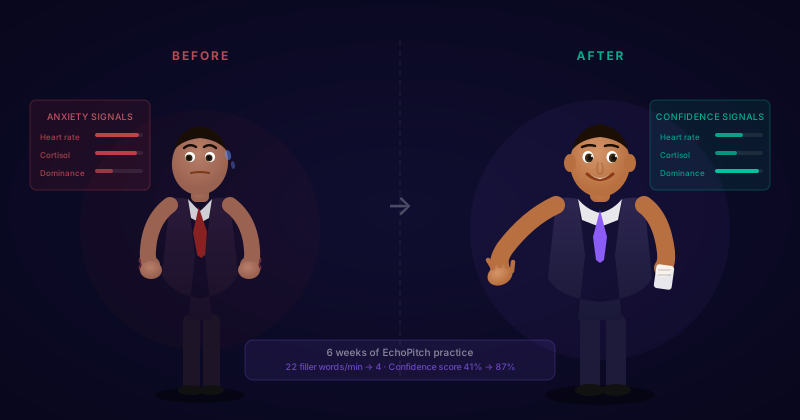
Deliberate low-stakes practice reduces how threatening presentations feel — which directly reduces the anticipatory anxiety that starts the nausea hours before you speak.
Start practising free →Get daily tips on Reddit
Join our community for presentation tips, Q&A, and support.