
Public Speaking for Introverts: Present Without Draining Yourself
Introversion is not a barrier to great speaking. It's a different operating system.
MBA, Bayes Business School · Founder, Cavefish · July 2026
Summary
Introverts can be exceptional public speakers — research shows they tend to prepare more thoroughly, listen better, and speak with substance rather than filler. Famous introverted speakers include Barack Obama, Bill Gates, and Susan Cain. The challenge is energy management, not ability. Research by psychologist Marti Olsen Laney shows introverts have higher baseline activity in the brain's frontal lobes, making them more sensitive to stimulation and requiring recovery time after social performance. Adam Grant's Wharton research found introverted leaders often outperform extroverts when managing proactive teams. Key strategies for introverts include: scheduling 30-60 minutes of quiet time before presentations, using the "podcast host" mindset (focus on one person at a time), preparing obsessively so delivery becomes automatic, building in micro-recovery pauses, and protecting recovery time afterward. Introversion is not a speaking disability — it's a different operating system that requires different strategies.
"I'm too introverted to be a good speaker." This is one of the most common limiting beliefs in professional development — and one of the most wrong.
Some of the most effective communicators in history have been introverts: Barack Obama, Bill Gates, Rosa Parks, Susan Cain. The difference isn't ability — it's energy management.
What is the difference between introversion and shyness?
First, let's clear up a common confusion. Introversion is about where you get energy, not whether you can speak to people.
- Extroverts gain energy from social interaction
- Introverts expend energy during social interaction and recharge alone
This is physiological. Psychologist Marti Olsen Laney's research shows introverts have higher baseline activity in the brain's frontal lobes, making them more sensitive to stimulation. Social interaction — especially public speaking — activates their nervous system more intensely.
This doesn't mean introverts speak worse. It means they need different preparation and recovery strategies.
Can introverts be better public speakers than extroverts?
Research from Adam Grant at Wharton found that introverted leaders often outperform extroverted ones when managing proactive teams. Why? They listen more, dominate less, and create space for others.
The same qualities translate to speaking:
| Trait | Introverts | Extroverts |
|---|---|---|
| Preparation | Extensive, thorough | Often improvised |
| Content depth | Substantive, researched | May include more filler |
| Q&A handling | Listen fully, thoughtful response | Quick response, may interrupt |
| Energy cost | High — needs recovery | Low — energised by speaking |
| Authenticity | High — considered, genuine | Variable |
- Preparation: Introverts tend to prepare more thoroughly, leading to more substantive content
- Depth over filler: Less tendency to ramble or fill silence with noise
- Authenticity: When introverts speak, it often feels more considered and genuine
- Listening during Q&A: Better at actually hearing questions instead of waiting to talk
How should introverts manage energy when presenting?
The key to public speaking as an introvert is treating your energy like a budget. You have a finite amount to spend, and speaking is expensive.
Before the presentation
- Schedule quiet time: Block 30-60 minutes before speaking for solitude. No calls, no meetings, no "quick chats."
- Arrive early: Acclimate to the space before people arrive. This reduces novelty stress.
- Prepare obsessively: The more automatic your content, the less cognitive energy you spend during delivery.
- Visualize one person: Instead of imagining a crowd, picture explaining your content to one specific person you know.
During the presentation
- The podcast host mindset: Imagine you're speaking to one person through a microphone. Make eye contact with individuals, not "the audience."
- Built-in pauses: Plan natural breaks where you pause for 2-3 seconds. This gives you micro-recovery moments.
- Water breaks: Keep water nearby. Sipping water is a socially acceptable pause that lets you reset.
- Limit Q&A energy: If Q&A drains you most, set a time limit or take questions in writing.
After the presentation
- Protect recovery time: Don't schedule anything demanding immediately after. You need to recharge.
- Debrief alone first: Process how it went by yourself before discussing with others.
- Recognize the cost: If you're exhausted after speaking, that's normal for introverts — not a sign you did it wrong.
How can introverts manage physical symptoms when presenting?
Many introverts describe intense physical responses to speaking: sweaty palms, racing heart, shaky hands, even feeling like crying. These are real physiological responses to overstimulation.
What helps:
- Physiological sigh: Double inhale through the nose, long exhale through the mouth. Stanford research shows this rapidly calms the nervous system.
- Cold water: Holding something cold activates the dive reflex, slowing heart rate.
- Grounding: Feel your feet on the floor. This interrupts the dissociation that comes with anxiety.
- Acceptance: Fighting the symptoms makes them worse. Acknowledge them and continue.
Watch: Stanford-backed breathing techniques for managing presentation anxiety
Read the transcript
Based on YouTube's automatic captions, lightly edited. It may still contain errors.
So, if you're nervous about presenting, watch this. 75% of people fear public speaking. If you're one of them, you're not broken. You're perfectly normal. I'm going to share three techniques that actually work, backed by research, not just vibes. Use these before your next presentation, interview or pitch. So let's start. The first one is the physiological sigh. This comes from Stanford neuroscience research. It's the fastest way to calm your nervous system. So here's how. Breathe in through your nose. Then take a second small inhale to fully expand your lungs. Then exhale slowly through your mouth. Inhale. Second sip of air and exhale. One or two of these will lower your heart rate faster than any other breathing technique. Do this in the bathroom, in your car, or right before you walk on stage.
Should introverts practice presentations privately?
One advantage introverts have: they're often more comfortable practicing alone. Use this.
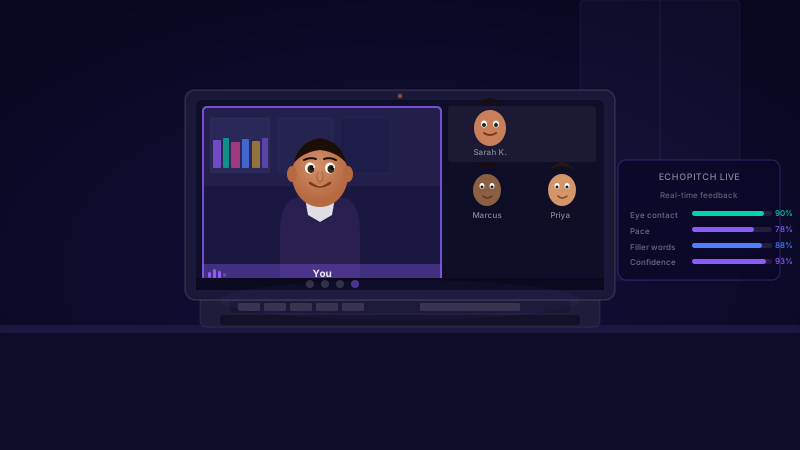
Tools like EchoPitch let you practice presentations privately with AI feedback. You can rehearse until your content is automatic — reducing the cognitive load during actual delivery.
The goal is to make the speaking part effortless so you can focus your limited energy on presence and connection.
How should introverts measure speaking success?
Extroverts often measure speaking success by energy in the room — laughter, applause, engagement. This is a game introverts can't win.
Instead, measure success by:
- Did people understand the key points?
- Did the message land?
- Did you communicate what mattered?
You don't need to be the most energetic person in the room. You need to be clear, credible, and authentic. Introverts can excel at all three.
The bottom line
Introversion is not a speaking disability — it's a different operating system. The best introverted speakers don't try to become extroverts. They build systems that work with their nature: thorough preparation, energy management, private practice, and recovery time.
You can present without draining yourself. You just need to stop fighting your wiring and start working with it.
Related guides
Get daily tips on Reddit
Join our community for presentation tips, Q&A, and support.