
Physical Symptoms of Presentation Anxiety
What's happening to your body — and how to manage each symptom.
Quick Answer
Presentation anxiety causes physical symptoms including racing heart, sweating, trembling hands, dry mouth, upset stomach, shallow breathing, a flushed face, and lightheadedness — all triggered when your sympathetic nervous system activates the fight-or-flight response and releases adrenaline and cortisol. Since you can't literally fight or flee a presentation, that mobilized energy has nowhere to go, so it surfaces as physical symptoms instead. Each has a specific cause and fix: adrenaline speeds your heart rate, calmed by 4-7-8 breathing and slow exhales; sweating comes from anticipatory cooling, helped by breathable fabrics and layers; trembling stems from muscle tension with excess energy, eased by shaking it out beforehand; dry mouth results from blood diverting away from digestion, helped by sipping water; and shallow breathing responds to conscious diaphragm breathing. Fighting these symptoms — telling yourself to stop sweating — tends to increase stress and make them worse. Accepting them as a normal, temporary reaction reduces secondary anxiety and often helps symptoms subside faster.
MBA, Bayes Business School · Founder, Cavefish · June 2026
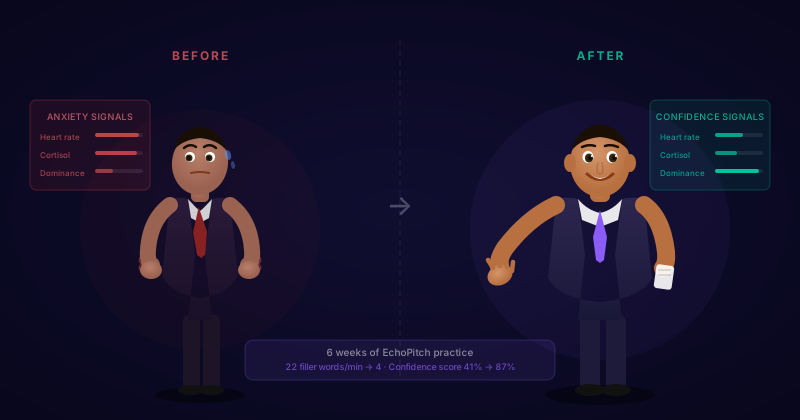
Your body is doing some strange things before that presentation. Your heart is pounding, you're sweating, your mouth is dry. Understanding why this happens can help you feel more in control.
Why your body reacts this way
All these symptoms are caused by your sympathetic nervous system activating the fight-or-flight response. Your brain perceives the presentation as a threat and prepares your body for danger.
The key hormones involved are adrenaline (for immediate response) and cortisol (for sustained stress). These trigger a cascade of physical changes designed to help you fight or run away.
The problem: you can't fight or run away from a presentation. So the energy has nowhere to go.
Symptom by symptom: What's happening and what helps
Racing heart
Why: Adrenaline increases heart rate to pump blood to muscles faster.
What helps: 4-7-8 breathing, slow exhales (longer exhale than inhale activates the calming parasympathetic system).
Sweating
Why: Your body anticipates physical exertion and pre-emptively cools you down.
What helps: Wear breathable fabrics, dress in layers you can remove, use antiperspirant (not just deodorant), keep the room cool if possible.
Trembling/Shaking
Why: Excess adrenaline creates muscle tension with nowhere to go.
What helps: Shake it out intentionally before presenting, use purposeful gestures, hold something (pen, clicker).
Dry mouth
Why: Fight-or-flight diverts blood away from digestion, reducing saliva production.
What helps: Sip water before presenting, have water nearby, lightly bite the tip of your tongue to stimulate saliva, avoid caffeine and dairy beforehand.
Upset stomach / Nausea
Why: Blood diverts from digestive system to muscles. Stress hormones can also cause stomach acid increase.
What helps: Eat a light meal 1-2 hours before (not right before), avoid heavy or spicy food, ginger or peppermint can help settle stomach.
Shallow breathing
Why: Fight-or-flight causes rapid, chest-level breathing to increase oxygen intake quickly.
What helps: Consciously breathe from your diaphragm (stomach expands when you inhale), slow your breath rate.
Flushed face / Blushing
Why: Blood vessels dilate under stress, causing visible redness.
What helps: This one is hard to control physically. Cool water on wrists can help. Focus on accepting it rather than fighting it — fighting makes it worse.
Feeling faint / Lightheaded
Why: Combination of hyperventilation (too much oxygen, not enough CO2) and blood pressure changes.
What helps: Slow your breathing, bend over briefly to send blood to your head, don't lock your knees when standing.
The counterintuitive approach: Accept, don't fight
Fighting symptoms often makes them worse. Telling yourself "stop sweating!" increases stress, which increases sweating.
Instead, try accepting: "My body is doing what bodies do when stressed. This is normal. It will pass."
This acceptance reduces secondary anxiety (anxiety about anxiety), which often helps symptoms subside faster.
The more you present, the less your body reacts. With repeated exposure, your nervous system learns that presentations aren't actually dangerous.
Build confidence with practiceKey takeaways
What physical symptoms does presentation anxiety cause?
- Physical symptoms are caused by fight-or-flight — your body trying to protect you
- Each symptom has specific management techniques
- Breathing exercises counteract many symptoms
- Preparation (hydration, light food, cool room) prevents some symptoms
- Accepting symptoms often works better than fighting them
- Repeated exposure reduces physical response over time
Put this into practice
Record yourself presenting with EchoPitch and get instant AI feedback on confidence signals, delivery pace, and filler words. 5 sessions, paid once. No subscription.
Start practising free →Get daily tips on Reddit
Join our community for presentation tips, Q&A, and support.