
Quick Answer
Presenting in a second language creates a double anxiety load— standard presentation fear compounds with linguistic performance anxiety, and each amplifies the other, since fight-or-flight impairs the same working memory that language retrieval depends on. Non-native speakers typically carry roughly twice the anxiety load of native speakers presenting the same material. Reducing it means preparing differently: build a glossary of the 20-30 topic-specific terms you'll actually use and practise them out loud in context, not just recognise them passively; rehearse the full presentation out loud in the target language, since silent preparation is far less effective for second-language speakers; and over-prepare your opening until it's completely automatic, because the anxiety peak in the first 90 seconds is exactly when linguistic retrieval is most impaired. Use slides with clear headlines as retrieval anchors, and deliberately slow your pace to around 80% of what feels natural. Research on audience perception shows accent is not a barrier to communication — audiences adapt to non-native accents within minutes.
Presenting in a Second Language: Managing the Anxiety
Non-native speakers presenting in a second language face a doubled anxiety load. Here's how to separate the two components and address each one.
MBA, Bayes Business School · Founder, Cavefish · May 2026
is the typical anxiety load for non-native speakers presenting in their second language — they experience standard presentation anxiety plus linguistic performance anxiety simultaneously.
The double anxiety load
Presenting in a second language creates two simultaneous anxiety sources that compound each other. Standard presentation anxiety activates the fight-or-flight response, which impairs working memory — including the language retrieval systems. This makes the linguistic challenge harder, which increases anxiety, which further impairs language production. Both loops feed each other.
Understanding this interaction is important because it suggests that reducing overall anxiety (through preparation and practice) directly improves linguistic performance — not just the delivery.
What to prepare differently
Build topic-specific vocabulary in advance
General English fluency is not the same as fluency in your technical domain under pressure. Prepare a short glossary of the 20–30 key terms you will use. Practise using them out loud in context — not just understanding them passively.
Practise the full presentation out loud in the target language
Silent preparation is significantly less effective for second-language speakers than for native speakers. Language production under pressure requires procedural memory built through speaking, not reading. Record yourself and listen back.
Over-prepare the opening specifically
The anxiety peak is in the first 90 seconds — when linguistic retrieval is most impaired. Memorise your opening until it is completely automatic in the target language. The first sentences should require no retrieval effort.
Use slides as linguistic anchors
Slides with clear headlines give you a retrieval prompt if you lose your thread. They also give the audience a visual reference that reduces the impact of minor disfluencies.
Slow down deliberately
Slower delivery improves comprehension for the audience and reduces the working memory load on you. It also makes minor errors less noticeable. Aim for 80% of the pace that feels natural.
Research on audience perception consistently shows that content quality and clarity matter far more than accent. Audiences adapt to non-native accents within minutes. Your perspective and expertise are more valuable than linguistic perfection.
Non-native speakers who present clearly in a second language demonstrate a capability that most native speakers do not have. That is a genuine professional asset, not a deficit.
Practice privately, build real confidence
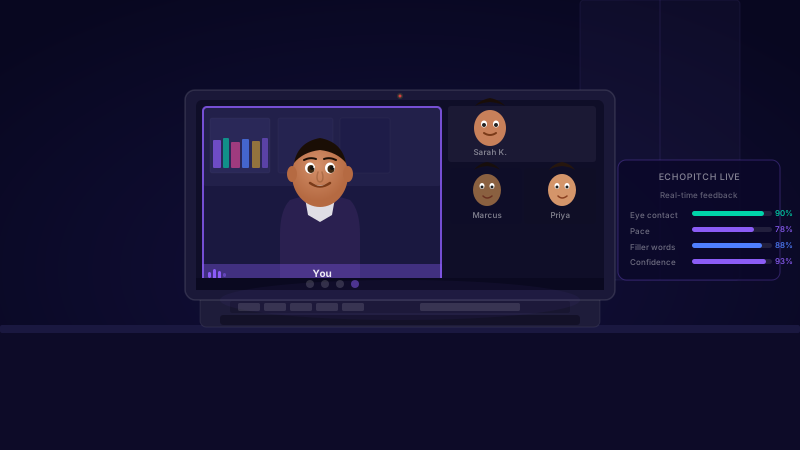
EchoPitch gives you private AI feedback on confidence, pace, and delivery — no audience, no judgement. 5 sessions, paid once. No subscription.
Try EchoPitch →