
Panic Attack During a Presentation
This guide is for general information only and isn't medical advice. It isn't written or reviewed by a licensed clinician. Talk to a doctor or qualified healthcare professional before starting, stopping, or changing any medication or treatment.
Whether you've had one mid-presentation or live in fear of having one — understanding the panic cycle changes the threat entirely. Here's what's happening and what to do.
MBA, Bayes Business School · Founder, Cavefish · May 2026
Quick Answer
If a panic attack starts during a presentation, follow five steps:take an extended exhale (breathe in for 4 counts, out for 7 — the longer exhale activates your parasympathetic nervous system within 30-60 seconds and is invisible to the audience), ground yourself by pressing your feet into the floor, deliberately slow your speech, accept the sensation rather than fighting it (“this is uncomfortable but not dangerous, it will pass”), and deliver your next simple sentence rather than your most complex point. A panic attack is a sudden surge of fight-or-flight triggered by perceived rather than actual danger, and its physiological peak typically lasts just 5-10 minutes if you don’t add secondary fear — noticing the symptoms and interpreting them as dangerous is what creates the escalating panic spiral. Fighting the sensation sustains it; acceptance shortens it. Long-term, graduated exposure reduces anticipatory dread by making the physical symptoms of anxiety feel less threatening over time.
minutes is how long a panic attack's physiological peak lasts — if you don't add secondary fear to the primary anxiety.
What's actually happening
A panic attack during a presentation is a sudden surge of the fight-or-flight response triggered by the perception of threat — not actual danger. Adrenaline floods the system, heart rate surges, breathing becomes rapid and shallow. The physiological experience is identical to genuine emergency response.
The terrifying paradox: noticing anxiety symptoms and interpreting them as dangerous creates more adrenaline, which intensifies the symptoms — the classic panic spiral.
Anxiety symptoms vs actual panic
Normal anxiety symptoms
- Racing heart
- Shallow breathing
- Shaking / trembling
- Flushing or sweating
Panic adds catastrophising
- "Something is terribly wrong"
- "I'm going to faint / collapse"
- "I'm losing control"
- "Everyone will see"
If you feel one starting: 5 steps
Extended exhale
Breathe in for 4 counts, exhale for 7. The longer exhale directly activates the parasympathetic nervous system. Works within 30–60 seconds. Completely invisible to the audience.
Ground yourself physically
Feel your feet on the floor. Press them down slightly. This activates proprioceptive awareness and shifts attention from catastrophic thoughts to physical sensation.
Slow your speech
Deliberate slowing of pace reduces cognitive overwhelm and signals safety to your nervous system. The audience reads slower pacing as authority, not anxiety.
Accept, don't fight
"Yes, I feel anxious. This is uncomfortable but not dangerous. It will pass." Acceptance removes the secondary fear that sustains the cycle. Fighting adds fuel to it.
Deliver the next simple sentence
Don't attempt your most complex point mid-panic. Say the next simple sentence. Then the next. Momentum rebuilds as adrenaline metabolises naturally.
Prevention long-term
The most disabling aspect of panic attack fear is anticipatory anxiety — the weeks of dread before a presentation where you imagine having a panic attack. This itself maintains the threat response.
Clark, D.M. (1986) A cognitive approach to panic. Behaviour Research and Therapy 24(4). Barlow, D.H. (2002) Anxiety and Its Disorders — panic cycle model. Craske, M.G. & Barlow, D.H. (2007) Panic disorder and agoraphobia. In Barlow (ed.) Clinical Handbook of Psychological Disorders.
Build your threat threshold through practice
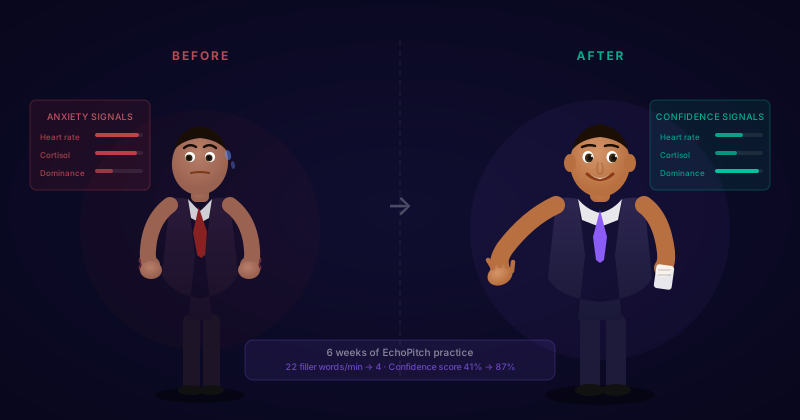
EchoPitch creates the low-threat exposure environment that gradually reduces your autonomic threat response. No audience. No consequences. Controlled exposure that builds resilience.
Start practising free →